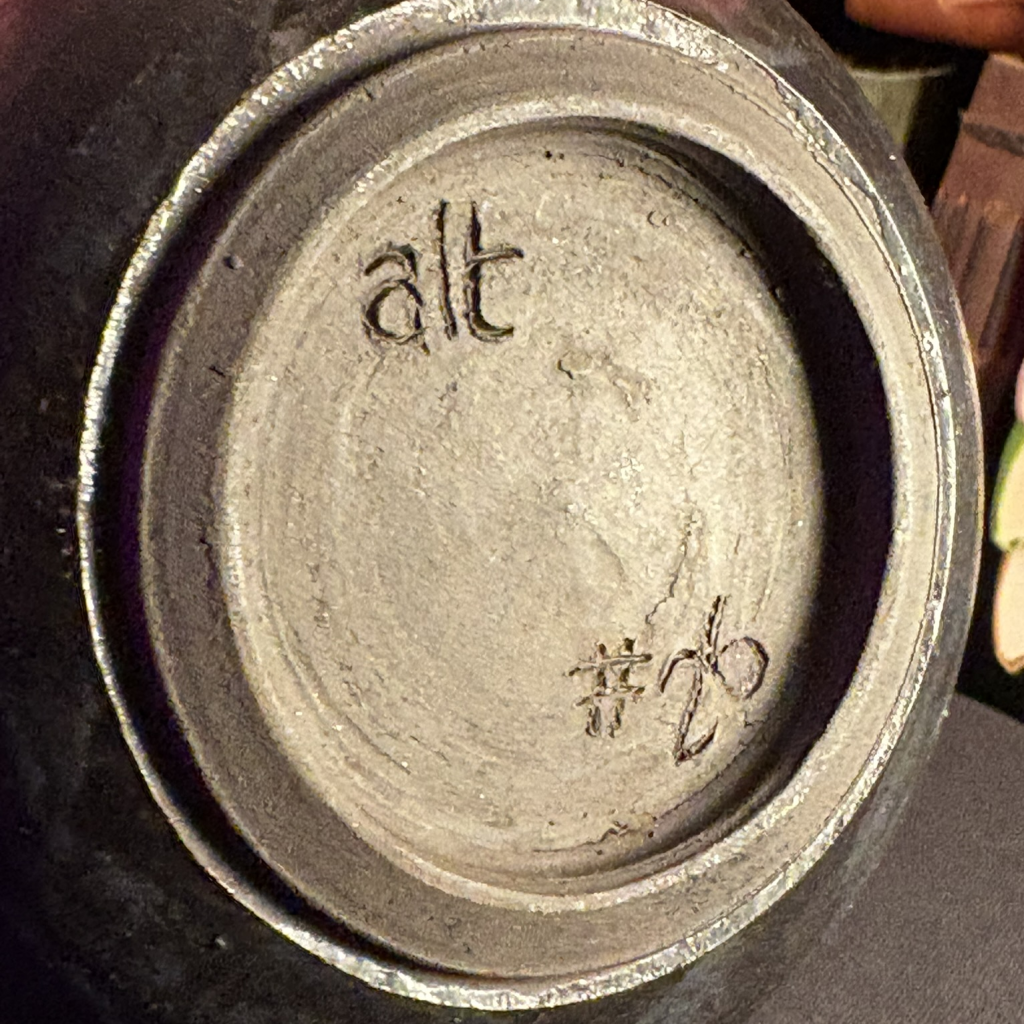
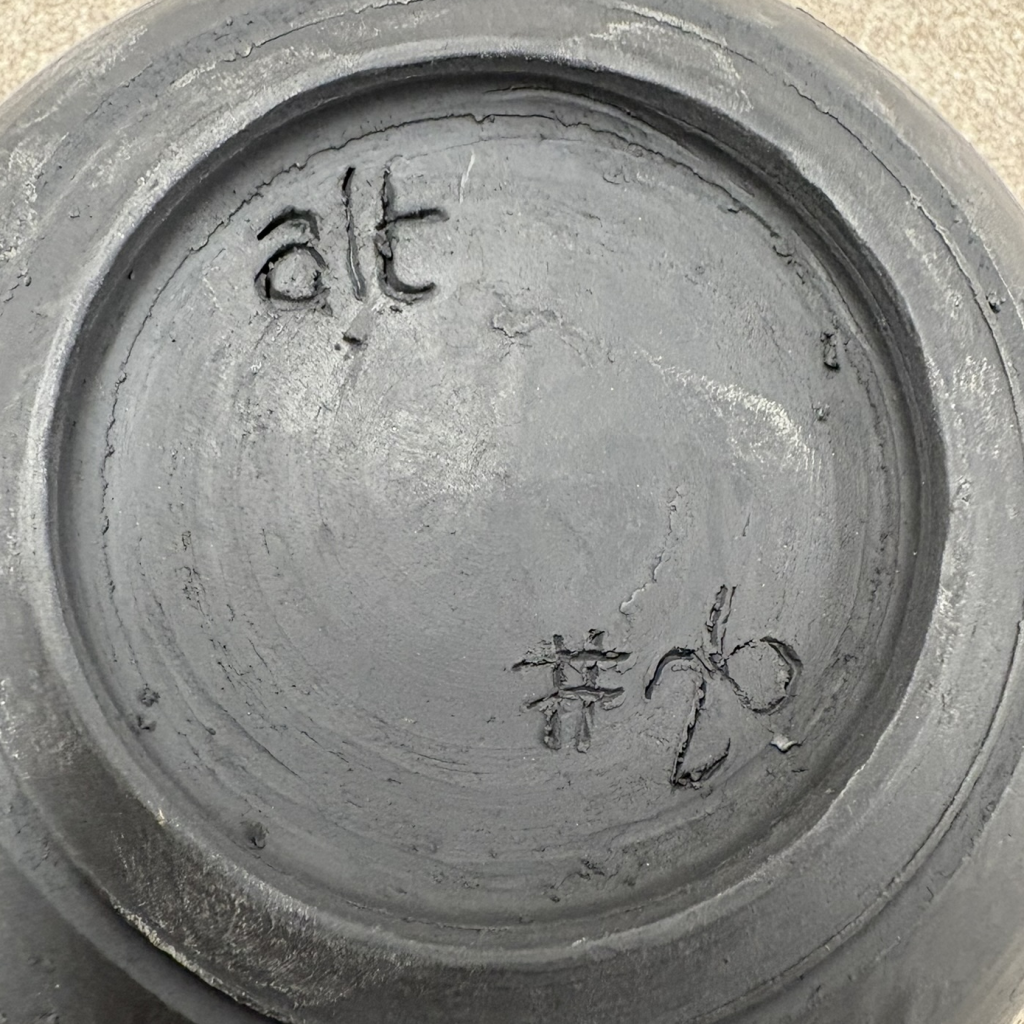
number: 26
A Bowl For Dark Brews

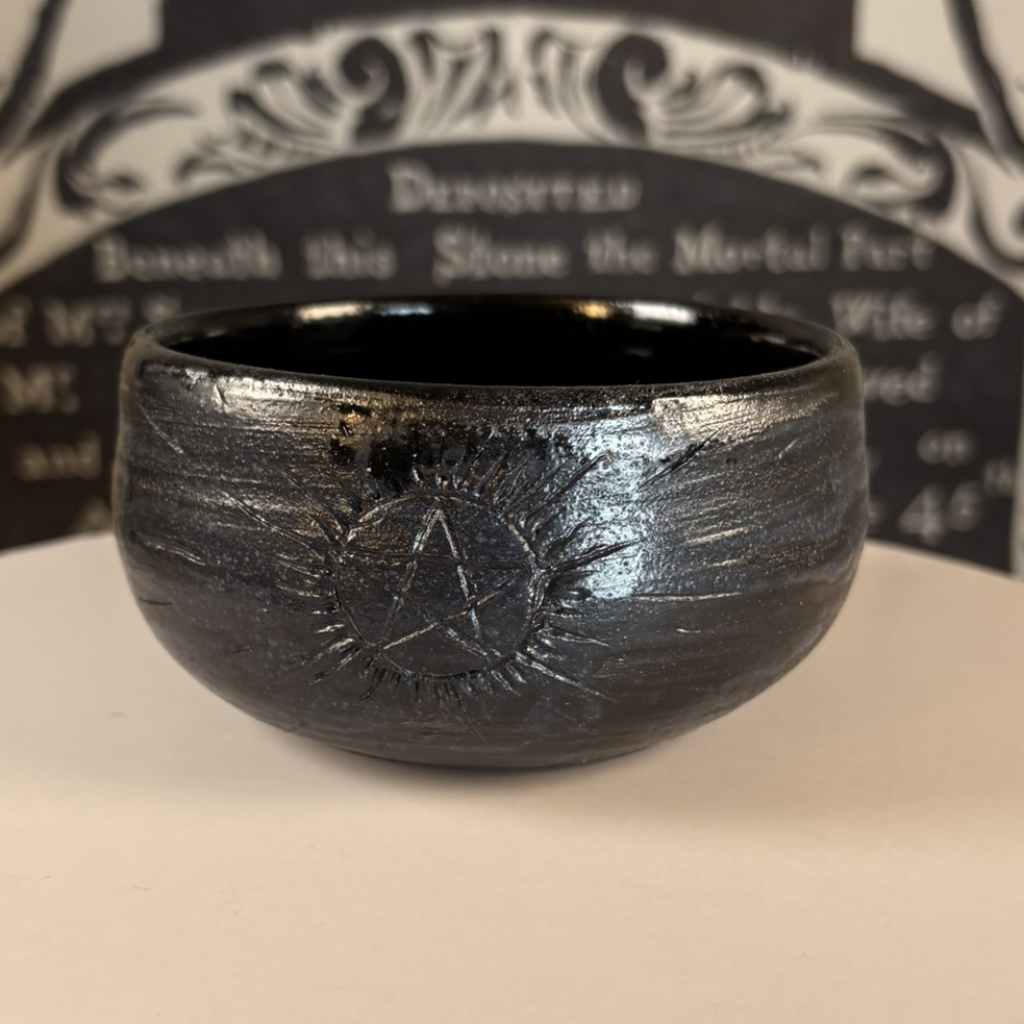
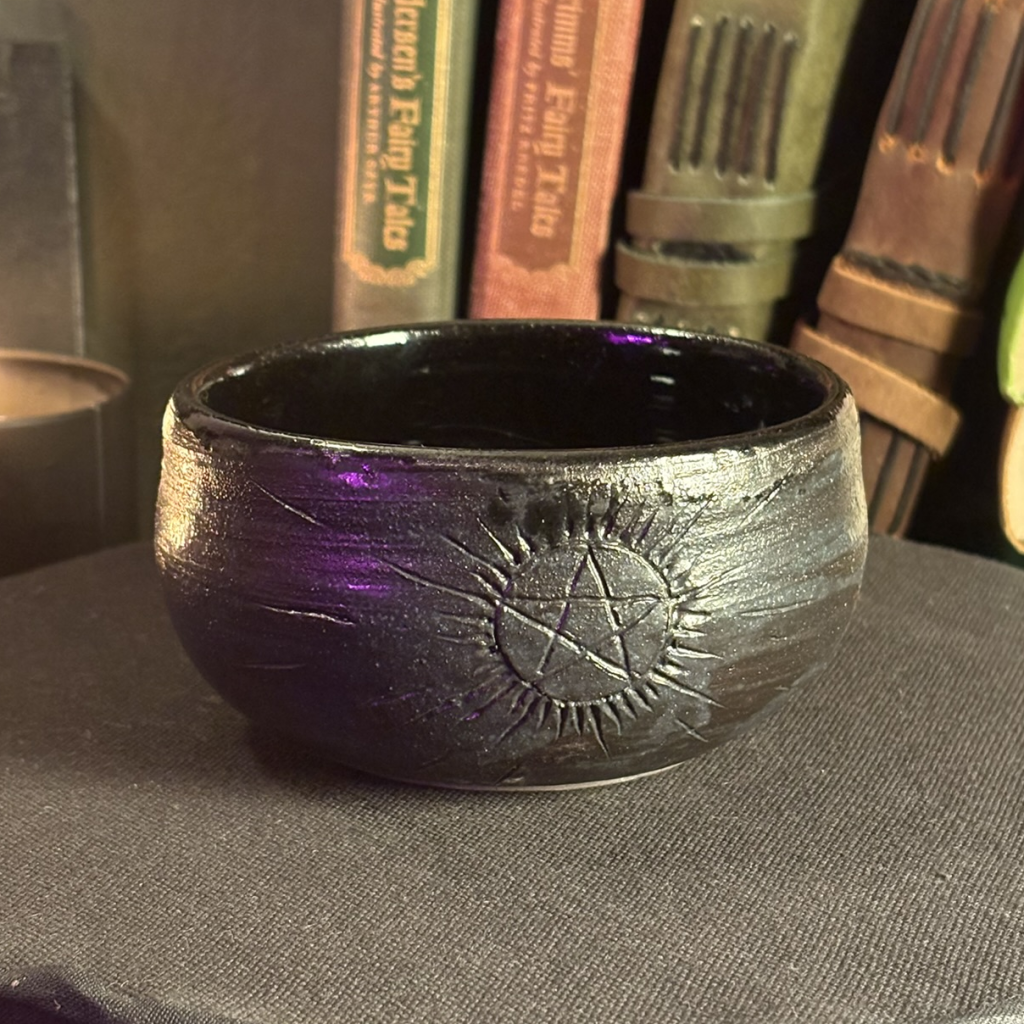
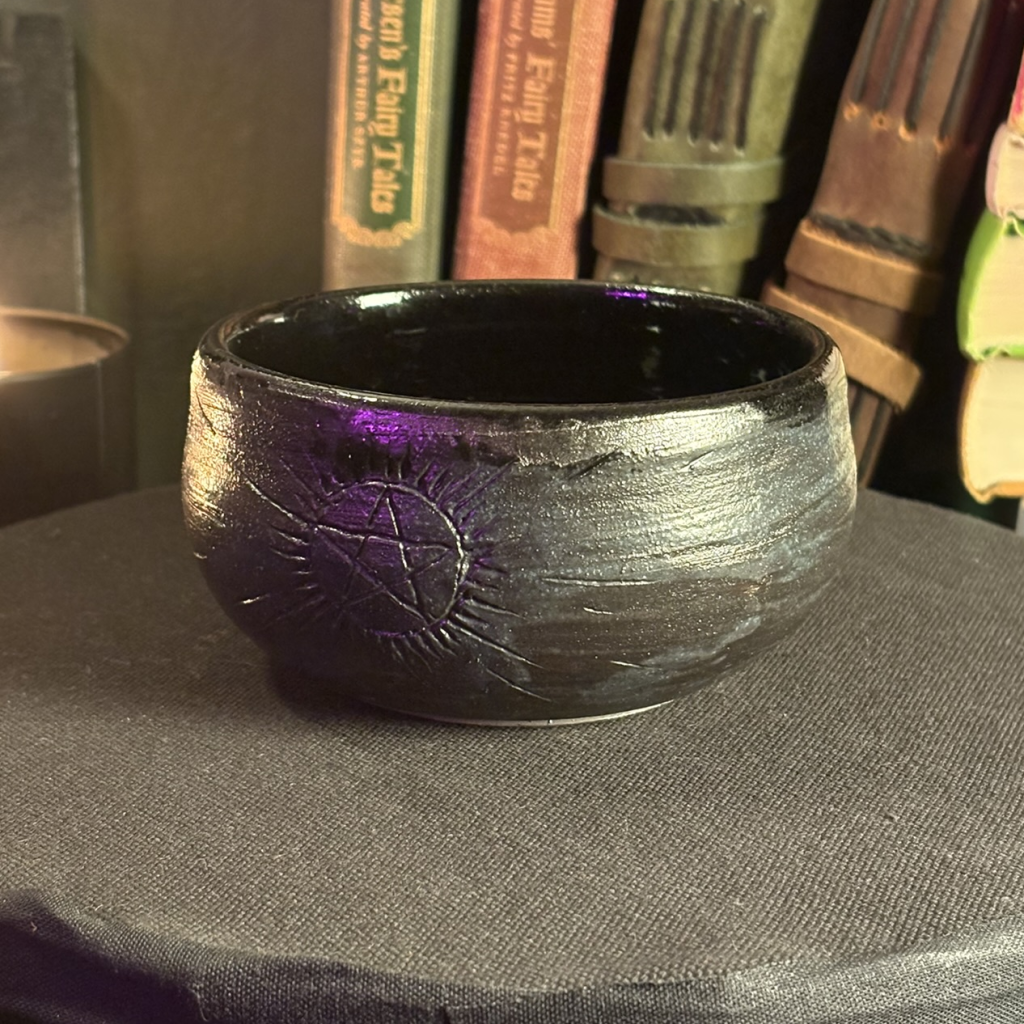
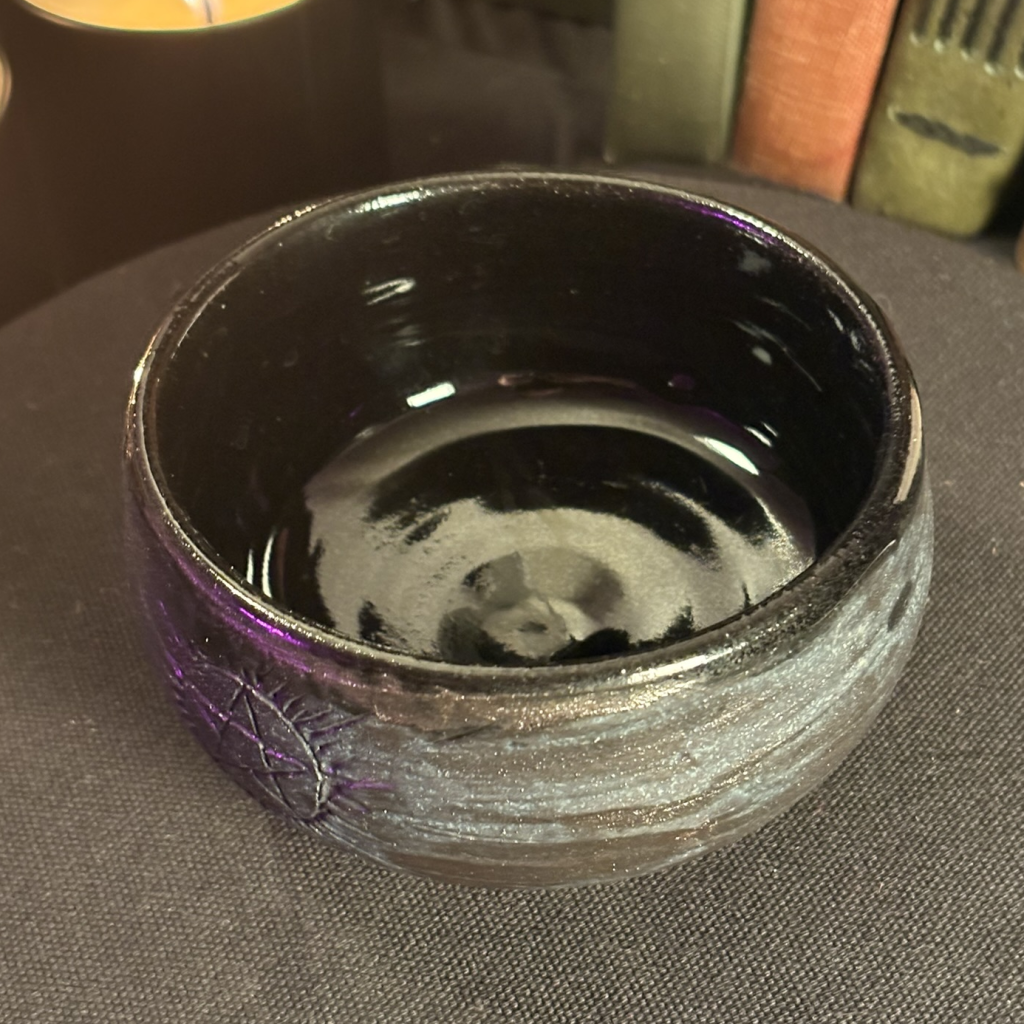
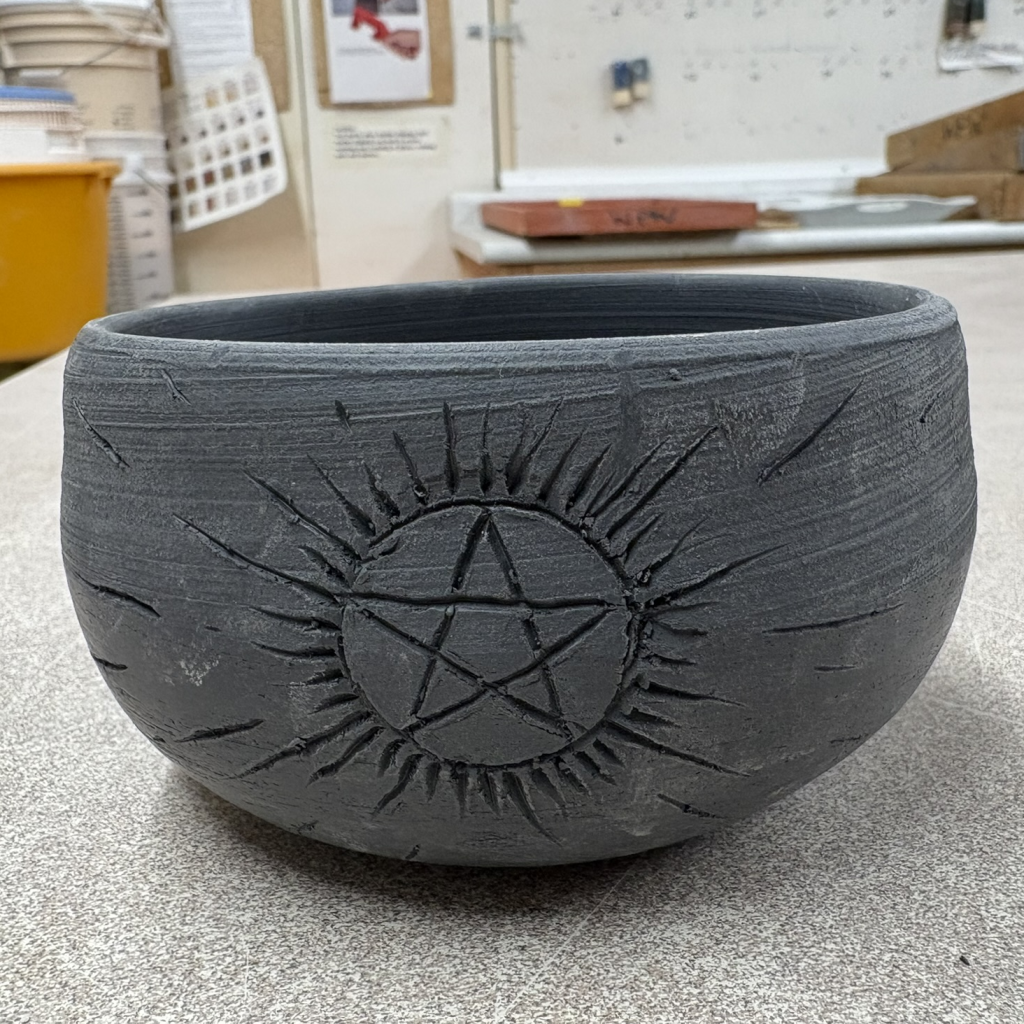
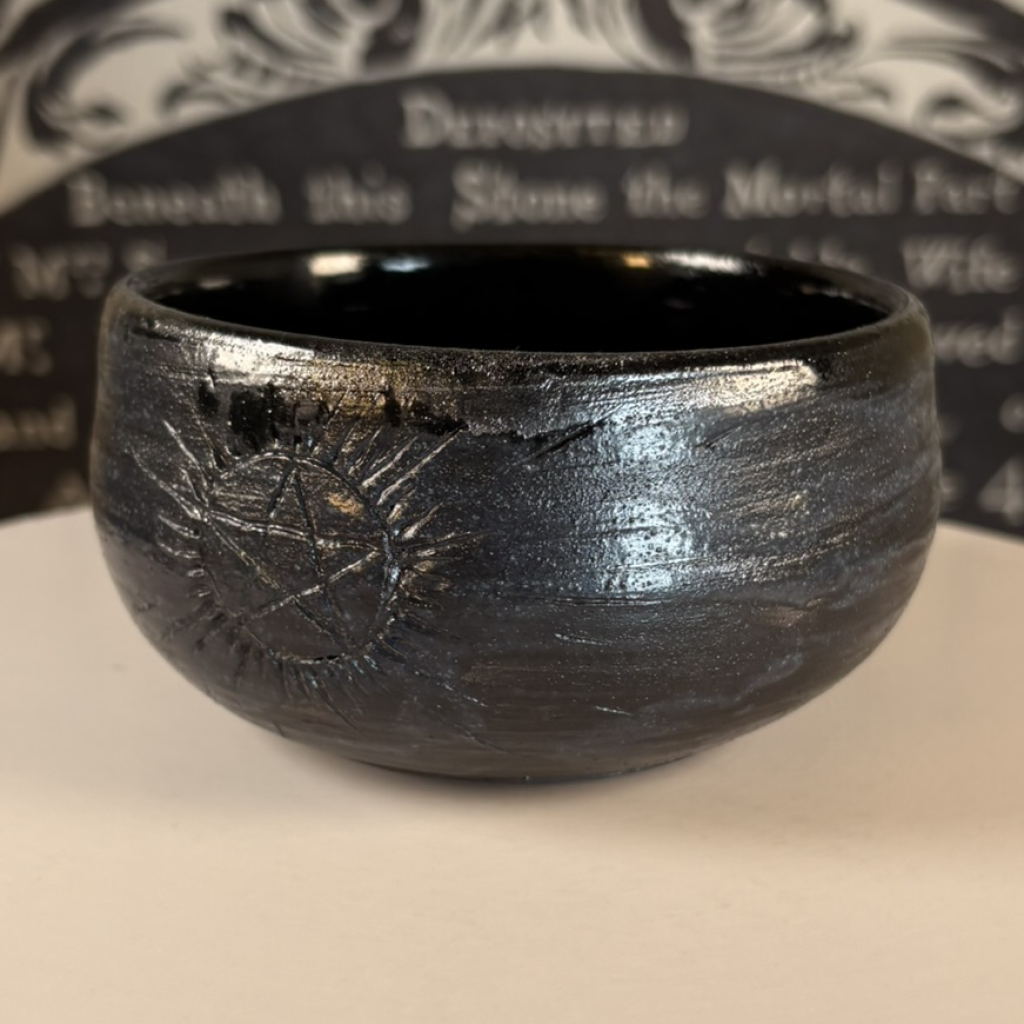
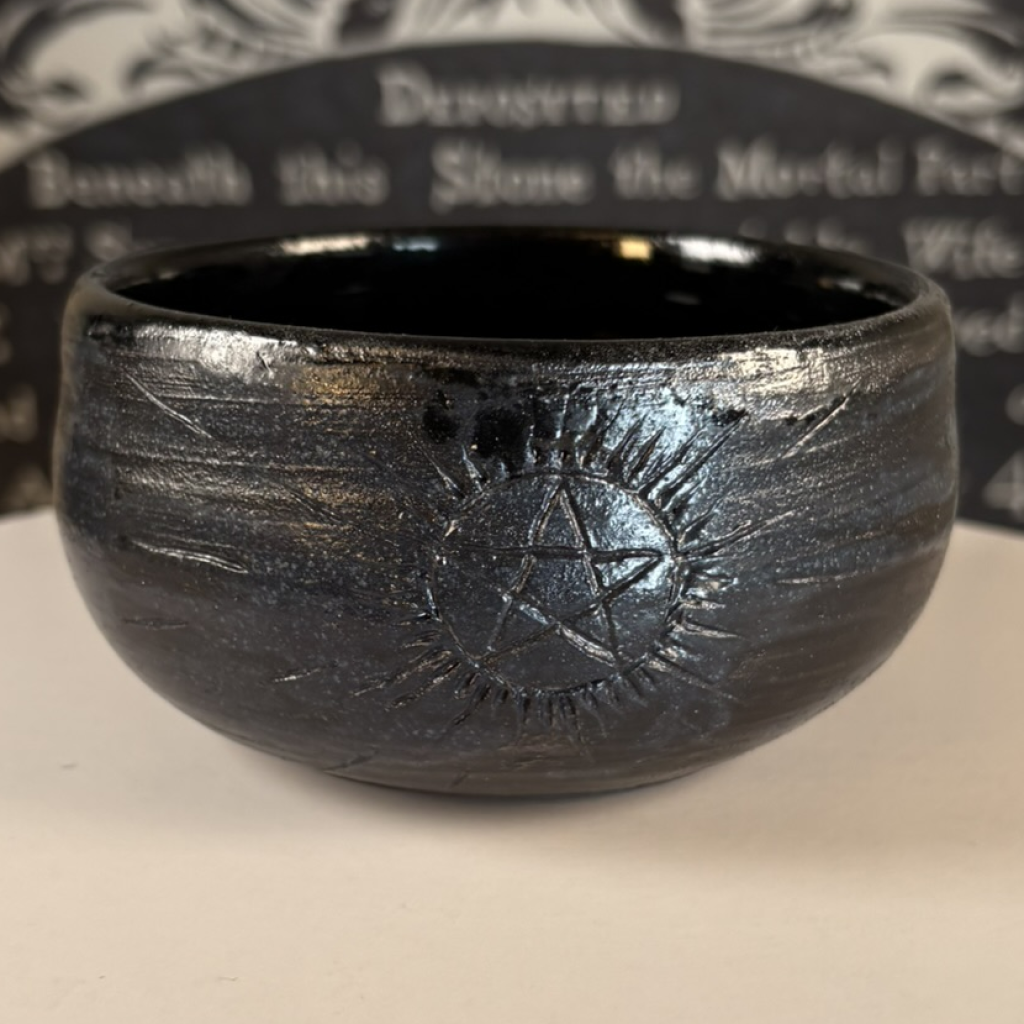
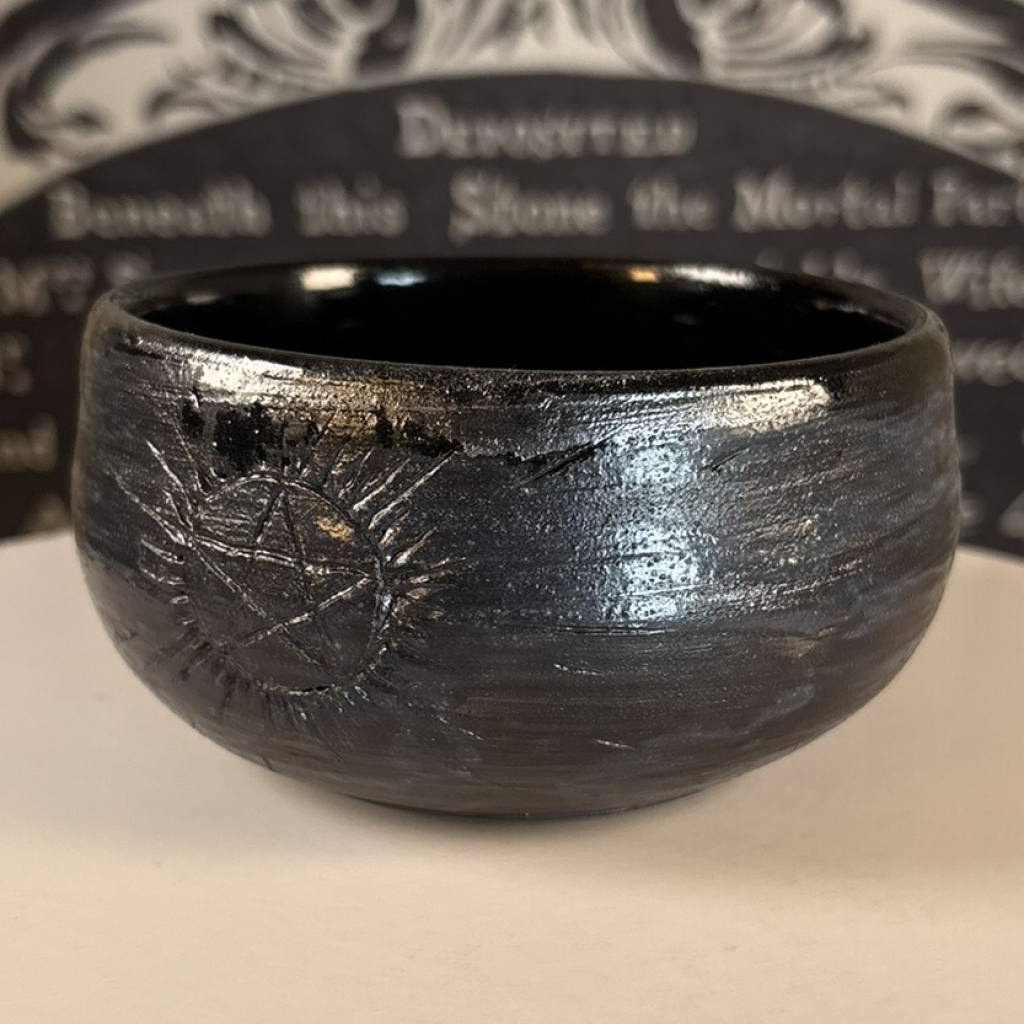
Shallow bowl with freehand pentacle emitting rays, glazed with a mottled and distressed matte black and transparent gloss.
This piece is available for sale
$75
Shipping within Canada is usually around $22. International can be $75 or more, so you really need to consider whether that's worthwhile.
I am currently setting up e-commerce and shipping stuff, but I do not have everything figured out... if you want to buy this, please just send me an email at altpottery@gmail.com and we'll make arrangements

weight: 449g
capacity: 269mL / 9.1 oz / 1.14 cups
Materials
- PSH cone 6 clay Black C540iPigmented with non-toxic iron oxide. Fires to a deep brown/black, deeper black when sealed with a transparent glaze. Not recommended for microwave heating because of its iron oxide content.
- PSH Wax Resist Emulsion UWAX2A brushable, water-wax emulsion applied to bisque pots to resist glaze. The wax burns away during firing, so none is present in the finished piece.
- "Licorice" glossy black glazeGlossy black glaze, made with iron oxide and cobalt carbonate. Food-safe, non-toxic. Recipe: https://glazy.org/recipes/3388
- PSH Transparent Glaze GTR62Non-toxic (lead free) glossy transparent finish, creates a food-safe surface for the interior of mugs and bowls, adds a gloss and brings out the hue of the clay body when used as a sealant.
- PSH Black Matte Glaze GBKM2Non-toxic (lead free) matte black, suitable for the exterior of pots. Rigid and durable, but vulnerable to scratches, gives a dark matte surface that resembles cast iron. A slow-drying glaze for brushing and detailed decoration.
Stages
- thrown: 2025-10-21 (waxing crescent)
- trimmed: 2025-10-22 (waxing crescent) A wide and stable but shallow foot such that the bowl appears to rest on a round underbody.
- decorated: 2025-10-22 (waxing crescent) I cheated and traced the circle so it would be accurately circular, but everything else was carved in freehand.
- bisque fired: 2025-11-02 (waning gibbous) Heated to approx 1000°C, producing chemical changes in the clay so that it is less brittle, water-resistant, water-absorbant, and can accept a glaze coating.
- glazed: 2026-02-04 (waning gibbous) Dipped and brushed with glaze
- glaze fired: 2026-02-09 (waning crescent)
- finished: 2026-02-10 (waning crescent)